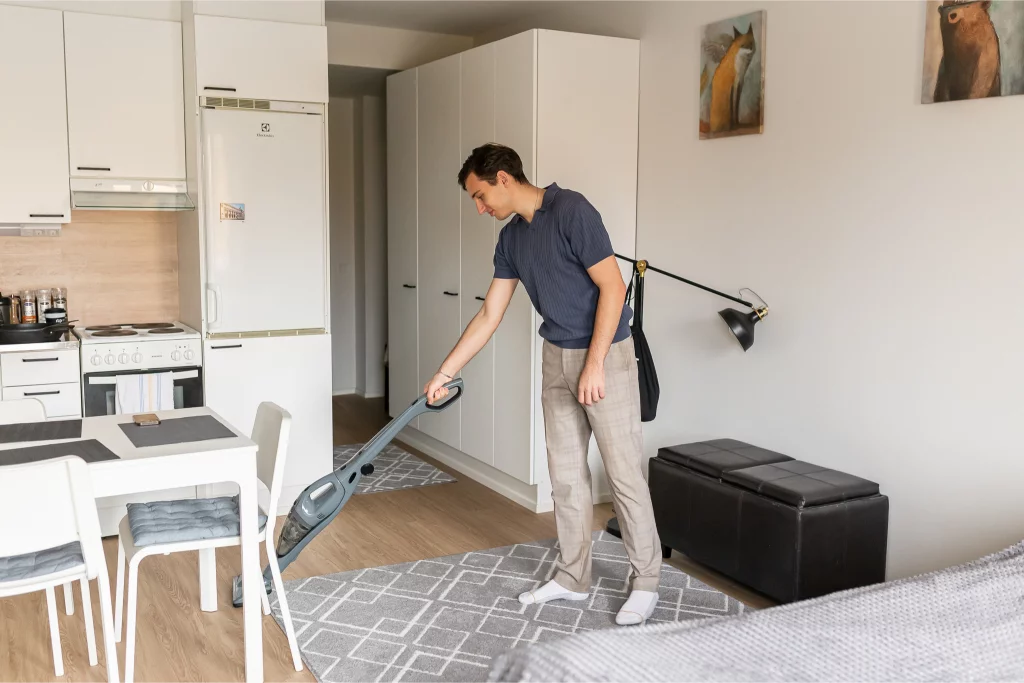









Baseboards collect dust exactly where cleaning is least comfortable: a few inches above the floor. Instead of spending the whole job kneeling or bending, use tools that extend your reach. A long-handled duster, vacuum attachment, or wrapped microfiber pad can clear most buildup while you remain standing.
Remove Loose Dust Before Wiping
Start with dry cleaning. Run a vacuum brush attachment along the top ledge of the baseboard, where dust tends to form a visible gray line.
A long-handled microfiber duster works well when a vacuum hose doesn’t reach comfortably. Broader simple household ideas can fit around this task, but dry dust removal should happen before any damp wiping so you don’t create muddy streaks.
Reach Corners Without Kneeling
Corners often hold hair and compacted dust. Use a crevice attachment or a narrow duster with an extension handle to loosen it.
Move furniture only when necessary. If a heavy piece cannot be shifted safely, clean the accessible edge rather than straining to reach several hidden inches.
Turn a Flat Mop Into a Baseboard Tool
A clean flat mop or floor wand can handle broad baseboard faces. Wrap a microfiber cloth around the head, secure it, and guide it gently along the trim.
This approach keeps your spine more upright and covers long stretches quickly. General interior care notes may include many decorative surfaces, while baseboards benefit most from a tool that lets you work at floor level from a standing position.
| Problem | Tool Choice | Helpful Technique |
|---|---|---|
| Loose dust | Vacuum brush | Work along top edge |
| Long wall run | Microfiber floor wand | Wipe while standing |
| Tight corner | Crevice tool | Loosen debris first |
| Sticky mark | Damp cloth on wand | Use light pressure |
Handle Stuck-On Marks Separately
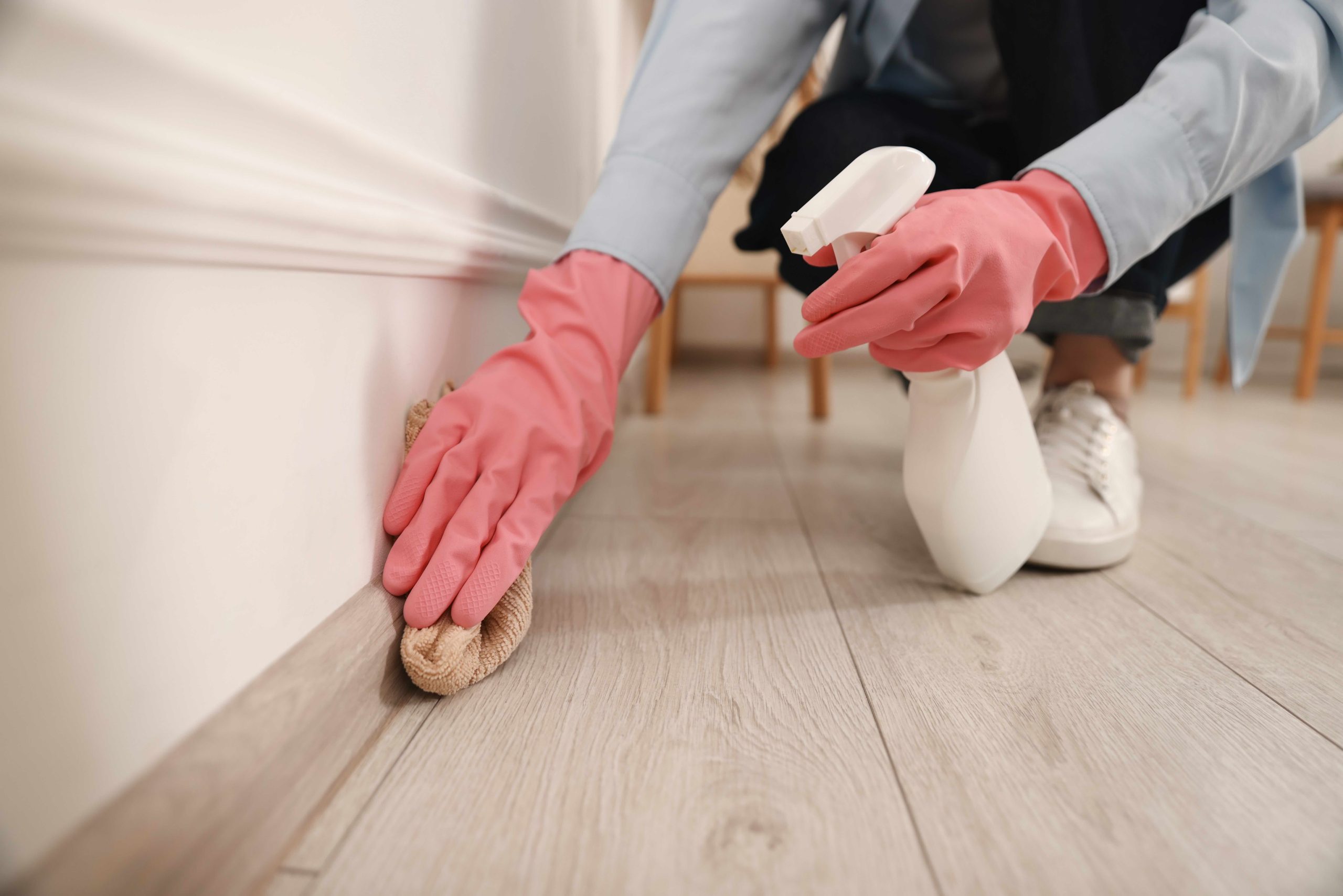
Once the dust is gone, inspect for scuffs and sticky spots. Lightly dampen a microfiber cloth with water and a small amount of mild soap, then attach it to your long-handled tool.
Work on small areas rather than soaking the trim. Painted wood and engineered materials can react differently to excess moisture, so test a hidden spot first if you’re unsure about the finish. This kind of practical detail is worth keeping alongside other home upkeep references.
Dry the Trim Afterward
If the baseboard remains visibly wet, pass over it with a dry cloth. Water left along seams can collect fresh dust and may be unsuitable for some finishes.
Drying also makes missed marks easier to see before you put the cleaning tools away.
Cleaning Habits That Create More Work
Wet-wiping dusty baseboards from the start is a common mistake. Moisture turns loose dust into a film that takes more passes to remove.
Another problem is bending continuously at the waist. Even a simple job becomes tiring when the same awkward posture is repeated along every wall. Work in short sections, change position, and use extension tools wherever possible. Strong abrasive pads can also dull painted surfaces, so begin with gentle cleaning rather than aggressive scrubbing.
Frequently Asked Questions
What is the fastest way to dust baseboards?
A vacuum brush attachment or long-handled microfiber duster is usually the fastest first step. Remove loose dust along the top edge and face before deciding whether any areas need damp cleaning.
How can I clean baseboards without kneeling?
Use a floor wand, flat mop, extension duster, or vacuum hose attachment. Attach a microfiber cloth for wiping so you can clean most of the trim while remaining upright.
How often should baseboards be cleaned?
Frequency depends on household dust, pets, flooring, and traffic. A quick dry pass during regular floor cleaning can prevent heavy buildup and reduce the need for longer scrubbing sessions later.
Make Baseboards Part of Floor Cleaning
Baseboards are easier to maintain when they aren’t treated as a separate deep-cleaning project. Add a quick dry pass before vacuuming or mopping the floor, then spot-clean marks only where needed. Using tools that reach the trim from standing height saves effort and makes regular maintenance much easier to keep up with.