







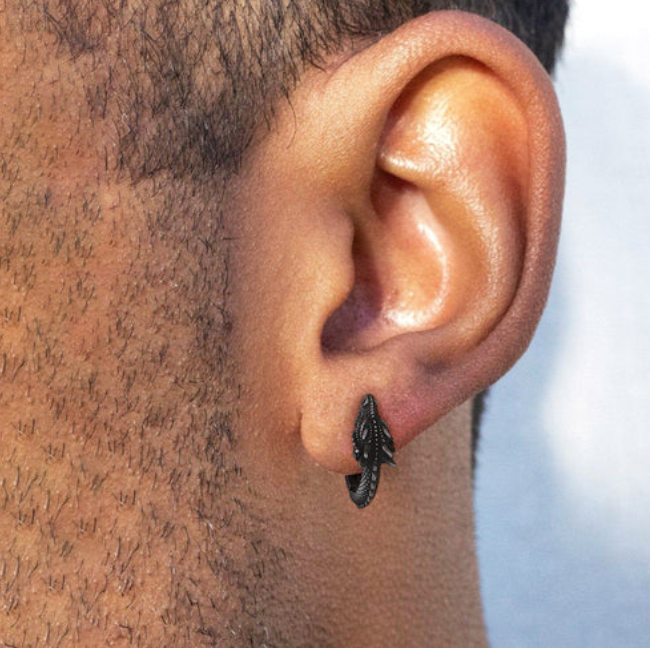
Why Men’s Hoop Earrings Demand More Thought Than Most Accessories
A hoop earring sits at face level. Everything worn below the chin operates at a distance, necklaces, bracelets, and rings register as accessories before they register as specific pieces. Earrings are different. They sit within the zone of direct eye contact and facial recognition. They are seen clearly in conversation, in photographs, and in professional contexts. Getting them right pays dividends proportional to their visibility. Getting them wrong is equally apparent.
This is not an argument against wearing hoop earrings for men. The opposite, actually. It is an argument for approaching the choice with the same intentionality that their visibility demands. Size, material, proportion to face shape, and alignment with your existing style all determine whether a pair of hoops reads as a considered part of your personal aesthetic or an afterthought.
The Size Question: Why It’s the Most Important Variable
Hoop size is measured in diameter, the distance across the opening of the hoop, and it is the single most consequential decision in choosing men’s hoop earrings. Everything else can be adjusted through styling. Size determines the fundamental character of the piece and its relationship to your face, your features, and your wardrobe.
The size spectrum runs roughly as follows:
DiameterCharacterBest context
6–8mmSubtle, barely-there. Reads like a small stud from a distance.Professional settings, first hoop wearers, minimalist style
10–12mmClearly a hoop without being bold. Most versatile range.Everyday casual, smart-casual, most face shapes
14–18mmA clear statement. Visible across a room.Creative or fashion-forward looks, larger faces
20mm+Bold and fashion-specific. Defines the look.Streetwear, high fashion, strong style identity
The most common mistake is choosing a size based on how it looks on a flat product page rather than how it will relate to the actual scale of your face and ears. A 20mm hoop that reads as moderately sized in a product photo can be overwhelming on someone with a smaller face. A 10mm hoop that looks substantial in a lifestyle shot can disappear on someone with a larger, more angular face. When uncertain, start in the 10–12mm range. It is the most forgiving and the easiest to style across multiple contexts.
Face Shape and Hoop Proportion
The relationship between hoop size and face shape is straightforward once you understand the underlying logic: hoops add visual width to the lower face around the ear. The goal is balance, not contrast.
Oval faces are the most accommodating of all hoop sizes. The balanced proportions of an oval face handle both small and large hoops without the accessory drawing attention to any particular imbalance. If you have an oval face, size decisions can be driven entirely by style preference.
Round faces benefit from smaller hoops. Larger circular hoops echo the circular face shape and can amplify it. The 8–12mm range works better here. Textured or segment hoops, which have visual breaks in the circle, work better than smooth unbroken rounds because they interrupt the circular repetition.
Square and angular faces can carry larger, rounder hoops well. The curve of the hoop provides contrast to the angular jaw and brow, creating a visual softening effect. The 14–18mm range reads particularly well on square-jawed faces.
Long or oblong faces benefit from wider hoops that add horizontal visual mass. A flat, wide hoop or a larger diameter hoop that extends outward creates balance at ear level. Avoid very small or very thin hoops, which elongate the face further.
Hoop Gauge: The Width of the Wire
Beyond diameter, the gauge (thickness) of the hoop wire significantly affects how a piece reads. Gauge is measured in millimeters of wire thickness, and the range from thin to thick covers very different aesthetic territory.
A thin gauge of 1–1.5mm reads as delicate and minimalist. At this thickness the hoop has a quiet presence, visible and intentional but understated. This gauge suits those who want their earrings to be part of their look rather than the defining feature of it.
A medium gauge of 2–3mm is the most versatile range for men’s hoops. It provides visual substance without bulk. The hoop reads clearly as a piece with presence. Most everyday men’s hoop earrings operate in this range.
A thick gauge of 4mm+ transitions the hoop from a jewelry piece to a statement accessory. At this thickness the hoop has significant visual weight and begins to read alongside clothing as a defining element of the look rather than a supporting one. This gauge suits streetwear and fashion-forward styling where accessories are expected to pull their own weight in the overall composition.
Material Guide: What to Choose and Why
Earrings are worn in direct contact with one of the most sensitive skin locations on the body. Material choice affects not just aesthetics and longevity but comfort and skin health. This matters more for earrings than for bracelets or necklaces.
Surgical stainless steel is the gold standard for sensitive ears. It is hypoallergenic, corrosion-resistant, and holds polish well over time. For anyone who has experienced irritation from cheaper metal earrings, the green skin discoloration that comes from copper-based alloys, surgical stainless steel resolves the problem entirely. It is also the most practical choice for daily wear because it requires no special maintenance and handles moisture without compromising its finish.
925 sterling silver is the classic choice for men’s hoops. The slight weight and warmth of silver at the ear creates a different sensory experience from stainless steel. Sterling silver can cause reactions in those with silver sensitivities (rare) and requires occasional polishing to maintain its finish. For those without sensitivities, it offers a more traditionally prestigious feel than stainless steel at a lower price point than gold.
Gold (yellow, white, or rose) is the premium material choice. Solid gold earrings are an investment but they never tarnish, never corrode, and develop a warmth and presence over years of wear that other metals don’t replicate. Yellow gold suits warmer skin tones. White gold and silver suit cooler tones. Rose gold has broad cross-tonal appeal and a distinctly contemporary quality that makes it one of the most popular choices in current men’s fine jewelry.
Titanium is worth mentioning for those with extreme metal sensitivities. It is the most hypoallergenic metal available for jewelry, lighter than steel or gold, and available in a range of anodized colors. It is less common in high-quality men’s hoop designs but the right choice for anyone who has reacted to every other metal.
Materials to avoid in daily-wear earrings: brass, copper-based alloys without protective plating, and thin gold or silver plating on base metals. The plating wears through at the post first, the area in most direct contact with skin, and the underlying base metal then causes the reactions that people assume are caused by the top coat.
Hoop Style Variations: Beyond the Standard Circle
The plain round hoop is the foundation of the category but it is far from the only option. Understanding the variations helps you match the piece to both your face shape and your style identity.
Plain round hoops are the most versatile and the most timeless. A polished plain hoop in silver or gold reads across casual, smart-casual, and even dressed-up contexts depending on size. They are the right starting point for anyone new to men’s hoop earrings because they introduce no additional style variables beyond the hoop itself.
Huggie hoops sit close to the earlobe with minimal drop. The diameter is small, typically 8–12mm, and the hoop wraps the ear closely rather than dangling. Huggies are the most wearable everyday option in the category because they have almost no movement, don’t catch on clothing, and look intentional across a very wide range of contexts.
Segment hoops feature a removable section that breaks the circle, allowing the hoop to be opened for insertion and closed for wear. This design eliminates the traditional hinge mechanism that can weaken over time. Segment hoops also create a subtle visual break in the circle that suits round faces better than continuous hoops (see face shape section above).
Twisted or textured hoops add visual interest through surface variation. A twisted wire hoop or a hammered texture catches light differently than a smooth surface, creating a more dynamic presence without increasing size. These suit those who want more visual interest from the piece without scaling up in diameter.
Embellished hoops add stones, spikes, beads, or charms to the hoop itself. These are the most fashion-specific option in the category and require the most confident styling. A spike-embellished hoop reads very differently from a plain sterling hoop at the same size. They suit those with a clear and established personal style that they’re extending rather than beginning to develop.
One Ear or Two: The Styling Logic
Both approaches are common and both are legitimate. The choice is partly aesthetic and partly a matter of personal statement.
Wearing matching hoops in both ears creates symmetry and a more committed aesthetic statement. It reads as deliberate and fashion-forward. This is the choice that communicates a clear position on personal style.
Wearing a hoop in one ear only, particularly the left ear, has a longer history in men’s jewelry and reads as more understated. A single hoop on one side allows the accessory to be present without dominating. It also pairs naturally with a small stud in the other ear for an asymmetric approach that reads as considered and contemporary.
The specific ear typically doesn’t carry the cultural signaling it once did. Choose based on which approach better suits the rest of your look and how prominently you want the earrings to feature in it.
Styling Hoop Earrings With the Rest of Your Look
Hoop earrings interact with everything at face level, hair, glasses, neckwear, and facial hair all influence how they read. Some styling principles that hold across most contexts:
Larger hoops benefit from shorter hair or hair worn up. When hair falls below the ear it partially obscures the hoop and disrupts the clean visual line. If you prefer longer hair worn down, smaller hoops or huggies that sit close to the ear will read more clearly.
Glasses and hoops can coexist but require scale consideration. Heavier, larger-framed glasses already carry significant visual weight at face level. Smaller hoops in the 8–12mm range complement rather than compete. Thin-framed or rimless glasses leave more room for a hoop with more presence.
Facial hair changes how earrings read. A full beard shifts visual weight downward and can make smaller earrings disappear. Those with significant facial hair often find that slightly larger hoops or those with more texture read better against the visual mass of the beard.
In terms of the wider accessory stack: hoops at ear level draw the eye upward. Necklaces draw the eye to the chest and neck. They can work together, but keep the overall density in check. If you’re wearing a statement hoop, keep necklaces minimal. If your necklace is the statement, let the hoops play a supporting role.
Caring for Hoop Earrings
Men’s hoop earrings in high-quality materials require minimal but consistent care. Remove them before swimming, showering, or heavy exercise where significant sweat and moisture will be present. Water exposure over time tarnishes sterling silver and compromises lower-quality coatings, even on otherwise durable pieces.
Clean the hoop surface regularly with a soft dry cloth. For sterling silver, a jewelry polishing cloth removes tarnish and restores the finish. For stainless steel and gold, the dry cloth is sufficient for regular maintenance.
The hinge or closure mechanism on quality hoops is engineered to handle regular opening and closing, but repeated stress in the same direction can weaken it over time. Open and close the hoop directly, don’t twist or bend the mechanism sideways, and the closure will last for years without failure.
Store hoops separately from other jewelry, particularly harder pieces, to prevent scratching. A small individual pouch or compartmentalized jewelry tray keeps them in condition between wears.
Where to Start if You’re New to Hoop Earrings
Start with a pair of 10–12mm plain hoops in surgical stainless steel or 925 sterling silver. This configuration introduces no variables beyond the hoop itself. You can assess how the size relates to your face, how the piece integrates with your existing style, and whether you want to go larger or smaller from there, all without committing to a material premium or a style that requires significant styling knowledge to wear well.
Wear them with what you already own before purchasing anything new. A good pair of hoops will integrate with your existing wardrobe rather than requiring it to change. If they don’t, that’s useful information, either the size isn’t right, or the style of hoop is more specific than your current wardrobe supports.
FaithHeart Jewelry’s men’s earring collection is built around exactly this logic, quality materials, considered sizing options, and designs that earn their place in a real wardrobe rather than requiring the wardrobe to reorganize around them.