







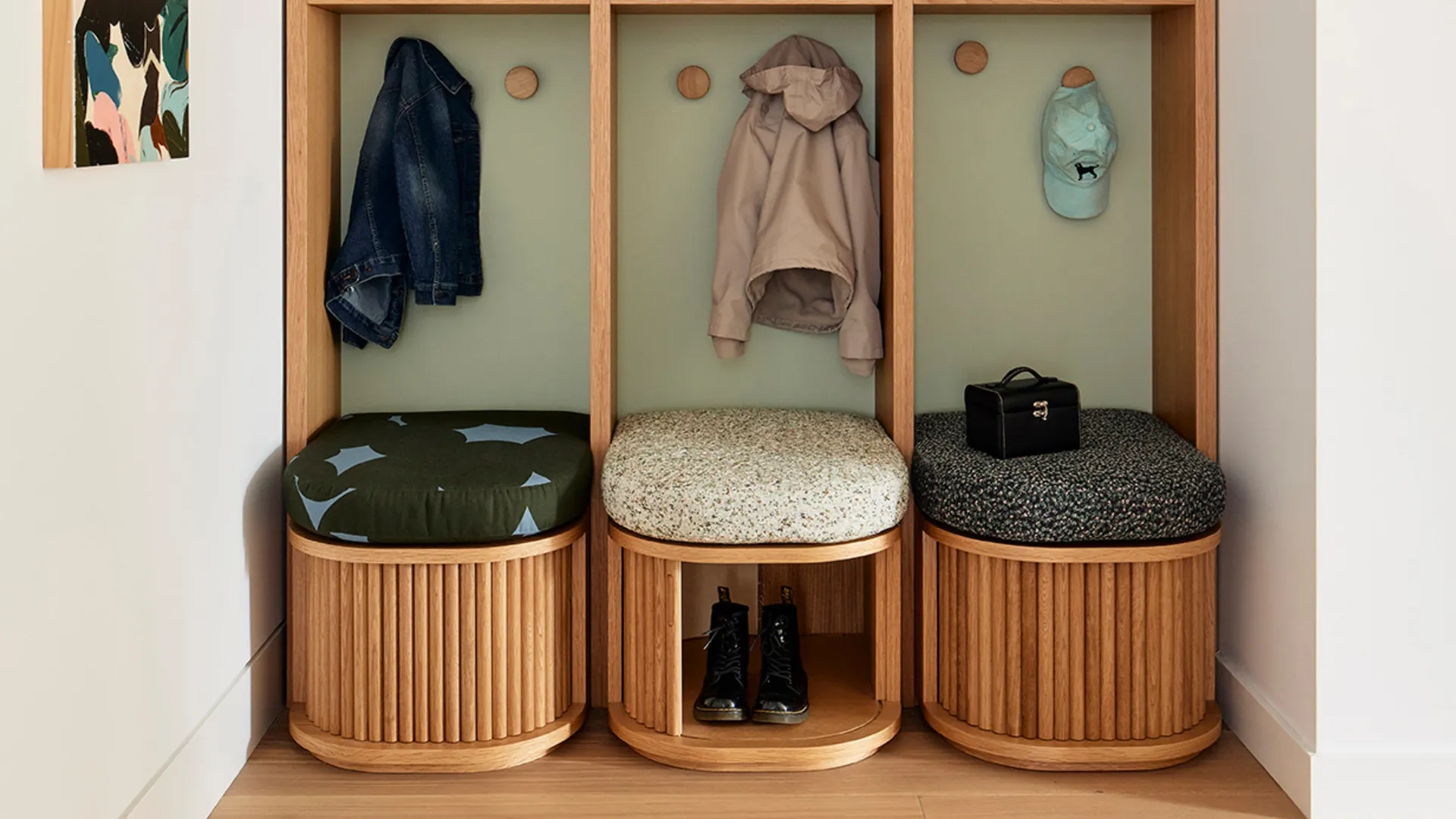
A cluttered entryway usually develops because everyday items have no obvious landing place. Shoes, bags, keys, mail, jackets, umbrellas, and pet gear pile up near the door because that’s where people naturally drop them.
Organizing the space works best when storage follows those habits instead of fighting them. Give frequently used essentials a simple home within easy reach.
Start With What Actually Enters the House
Remove everything from the immediate entry area and sort it by frequency of use. Daily items deserve the easiest access, while seasonal or rarely used belongings can move elsewhere.
Don’t design the entryway around objects that barely appear there. A small basket for keys may be more useful than a large decorative cabinet that occupies valuable floor space.
People looking through home organization reading may find endless storage ideas, but the best setup begins with the specific items their household drops near the door.
Give Shoes a Defined Boundary
Shoes create visual clutter quickly because they spread across the floor. A low rack, boot tray, narrow cubby, or designated basket can contain them without turning the entry into a full closet.
Keep only frequently worn pairs near the door. Moving occasional footwear to bedroom or closet storage prevents the entryway from becoming permanent overflow space.
Plan for Wet Weather
A washable mat or boot tray can protect floors during rainy or snowy conditions. Leave enough open space for damp footwear to dry rather than stacking wet shoes tightly together.
Collections of practical living ideas can inspire storage solutions, yet climate and household routines should decide what belongs near the entrance.
| Item | Simple Storage | Best Position |
|---|---|---|
| Keys | Small tray or hook | Near the door |
| Shoes | Rack or boot tray | Floor level |
| Bags | Strong wall hooks | Shoulder height |
| Slim sorter | Near drop zone |
Use Vertical Space Before Adding Furniture
Small entryways can feel tighter when every storage problem is solved with another piece of furniture. Walls and the back of doors often provide better options.
Install hooks for bags, jackets, dog leashes, or umbrellas where appropriate. A slim shelf can hold lightweight objects without reducing walking space.
Readers exploring everyday household articles may see large mudroom designs, but compact homes often benefit more from a few well-positioned hooks than a bulky storage unit.
Create a Small Drop Zone
Keys, wallets, sunglasses, access cards, and incoming mail need a controlled place to land. Without one, they migrate to countertops, tables, or the floor.
Choose a tray, shallow bowl, narrow shelf, or wall organizer that matches the volume of items arriving each day. If the container fills constantly, the problem may be excess belongings rather than insufficient storage.
Separate Incoming and Outgoing Items
A dedicated spot for items that need to leave the house can prevent forgotten returns, packages, paperwork, or reusable shopping bags.
Keep that area small so it doesn’t become long-term storage.
Where Entryway Organization Breaks Down
Overloading the space is the most common failure point. Adding bins, benches, baskets, shelves, and hooks without removing anything can make a small entrance feel even more crowded.
Another mistake is giving every family member too much permanent space near the door. The entryway should support departures and arrivals, not store an entire wardrobe.
Decor can become clutter too. If decorative objects block the tray where keys belong, the system will lose to daily habits.
Frequently Asked Questions
How do I organize an entryway without a closet?
Use wall hooks, a narrow shoe rack, a compact key tray, and one small container for loose essentials. Prioritize vertical storage so the walking path remains clear.
What should be stored near the front door?
Keep items used during most departures nearby, such as keys, frequently worn shoes, everyday bags, outerwear, umbrellas, or pet leashes. Store less-used belongings elsewhere.
How can I keep entryway clutter from returning?
Create fixed homes for common items and reset the area regularly. A two-minute evening cleanup can prevent small piles from becoming a larger weekend organizing project.
Make the Doorway Work for Daily Life
A useful entryway doesn’t need large furniture or complicated storage. It needs clear boundaries for the few objects that repeatedly arrive and leave with the household.
Start with shoes, keys, bags, and mail. Assign each one an easy location, remove items that don’t belong near the door, and protect the walking path. The space will stay calmer because the organization supports habits people already have.