








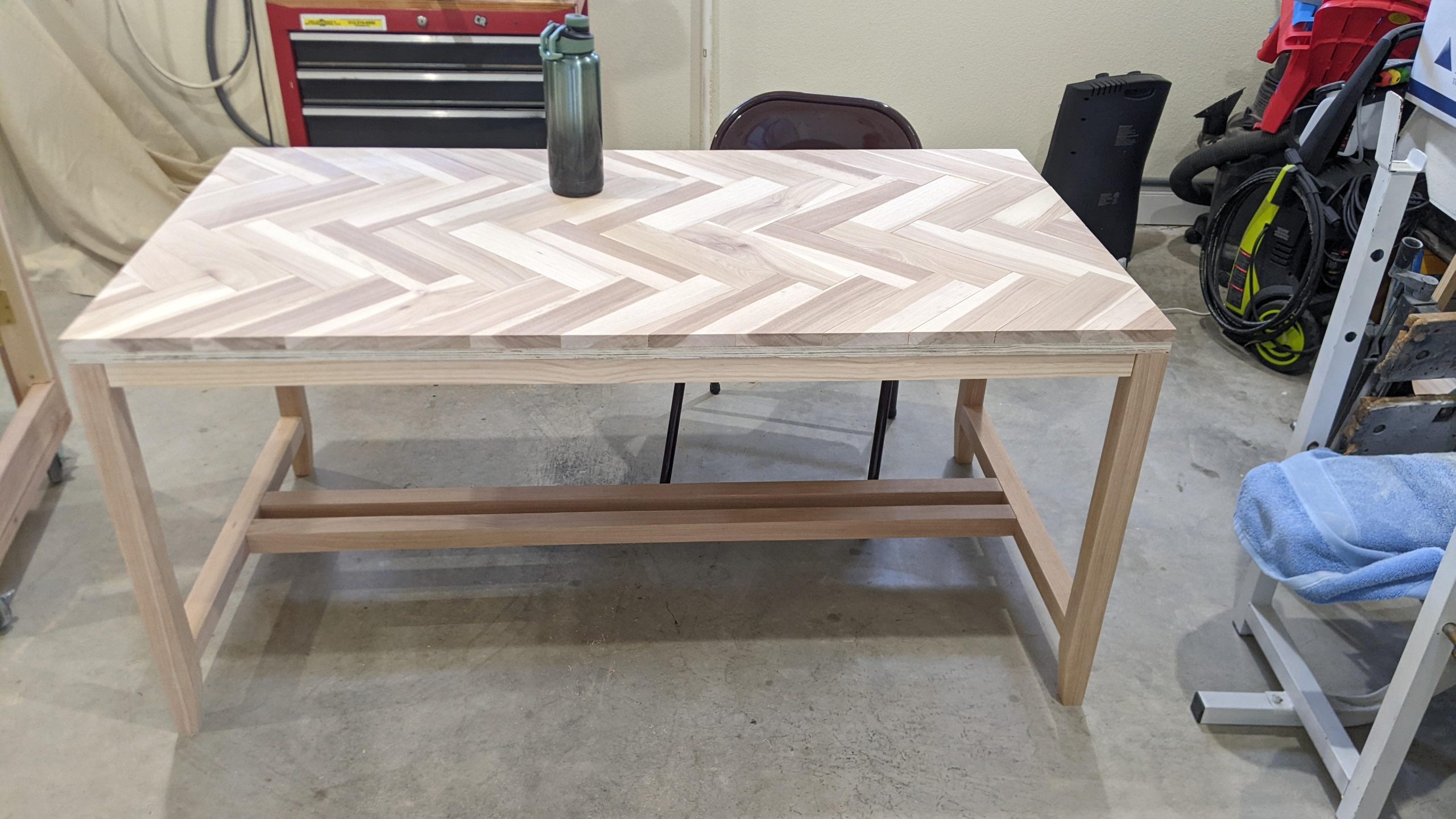
A table that rocks every time someone touches it is annoying, but the cause is often simple. Wobbly table legs can result from loose screws, weakened joints, worn hardware, an uneven floor, or one leg sitting slightly shorter than the others. Check the source of the movement before adding shims or tightening every fastener you can find.
Find Out Where the Movement Starts
Place the table on a firm, level surface and press gently on opposite corners. Watch the legs and joints rather than focusing only on the tabletop.
If a leg moves where it joins the frame, the joint needs attention. If the table remains rigid but rocks against the floor, the furniture may be sound and the floor may simply be uneven.
General home interior guidance often becomes more useful when small furniture problems are separated into structural issues and surface-level annoyances.
Tighten Hardware Before Doing Anything Permanent
Turn the table over or access the underside safely. Check bolts, screws, brackets, corner blocks, and other fasteners.
Tighten loose hardware gradually. Don’t force a screw that continues spinning, because the hole may already be stripped.
For a stripped screw hole in solid wood, an appropriate repair can restore enough material for the screw to grip again. If metal inserts or specialty fasteners are damaged, replacing the hardware may be cleaner than improvising.
Ideas found in broader exterior maintenance topics reinforce a useful repair habit: fix the failed connection itself rather than covering the movement with a temporary surface adjustment.
Check Glue Joints and Leg Connections
Older tables may rely on glued mortise-and-tenon joints, dowels, or corner blocks. If a joint has opened, simply driving another screw through it can damage the furniture.
| Problem | What You Notice | Likely Fix |
|---|---|---|
| Loose bolt | Leg shifts at bracket | Retighten hardware |
| Stripped hole | Screw won’t grip | Repair hole |
| Open glue joint | Visible joint movement | Reglue correctly |
| Uneven floor | Rigid table rocks | Use suitable leveling pad |
A loose glued joint usually needs to be cleaned and reglued with the parts aligned and clamped correctly. Decorative or valuable furniture deserves extra caution because invasive repairs can reduce both appearance and value.
Correct Uneven Contact With the Floor
If every joint is firm, check whether all four legs touch the floor. Move the table to another flat area to see whether the wobble follows the furniture.
For a slight difference, a thin furniture leveling pad may solve the problem without cutting a leg. Adjustable feet can work well on utility tables designed to accept them.
Outdoor tables develop similar issues because surfaces aren’t always level. Reading about patio furniture care can provide useful context when the same leveling problem appears on decks, pavers, or other outdoor surfaces.
Fixes That Can Create a Bigger Problem
Cutting one table leg should be a last resort. A floor that slopes slightly can make a perfectly square table appear defective, and shortening a leg may make it wobble somewhere else.
Overtightening hardware can also strip wood or bend brackets. Randomly adding screws may split a narrow leg or interfere with an existing joint. Start with diagnosis, then make the smallest repair that removes the movement.
Frequently Asked Questions
Why does my table wobble even though the screws are tight?
The floor may be uneven, a glued joint may be loose, or one leg may not contact the surface correctly. Tight screws don’t guarantee that every structural joint is sound.
Can I use cardboard under a wobbly table leg?
It can work as a temporary test, but cardboard compresses and absorbs moisture. A proper furniture pad, leveler, or repair to the actual joint provides a more durable result.
Should I glue a loose table leg?
Glue may be appropriate when the original joint was glued and the surfaces can be properly prepared and clamped. Don’t simply squeeze glue into an unidentified loose joint and expect a lasting repair.
Stabilize the Cause, Not the Symptom
A steady table starts with finding where the movement originates. Tighten sound hardware, repair stripped connections, reglue failed joints when appropriate, and use leveling pads only when the furniture itself is solid. Avoid cutting legs or adding random fasteners until you’ve ruled out a simple floor problem. The smallest correct fix is usually the one that lasts.