









A gear lever may move slightly as the drivetrain reacts to acceleration and deceleration. Noticeable gear lever vibration, however, can point toward worn mounts, engine roughness, drivetrain imbalance, linkage problems, or components that are allowing excessive movement.
The timing of the vibration matters. A lever that shakes only at idle tells a different story from one that vibrates mainly under acceleration.
Use the Driving Condition as a Clue
Begin by observing when the vibration becomes strongest. At idle, engine condition and mounts deserve attention. During acceleration, drivetrain movement, axles, driveshaft components, or transmission mounts may become more relevant.
Speed-dependent vibration may indicate something rotating farther downstream. RPM-dependent vibration that occurs even when stationary points more strongly toward the engine, clutch, flywheel, or mounting system.
Don’t Focus Only on the Lever
The gear lever often acts like an indicator because it is connected mechanically or indirectly to the transmission. The actual fault may be several feet away from the driver’s hand.
Check Engine and Transmission Mounts
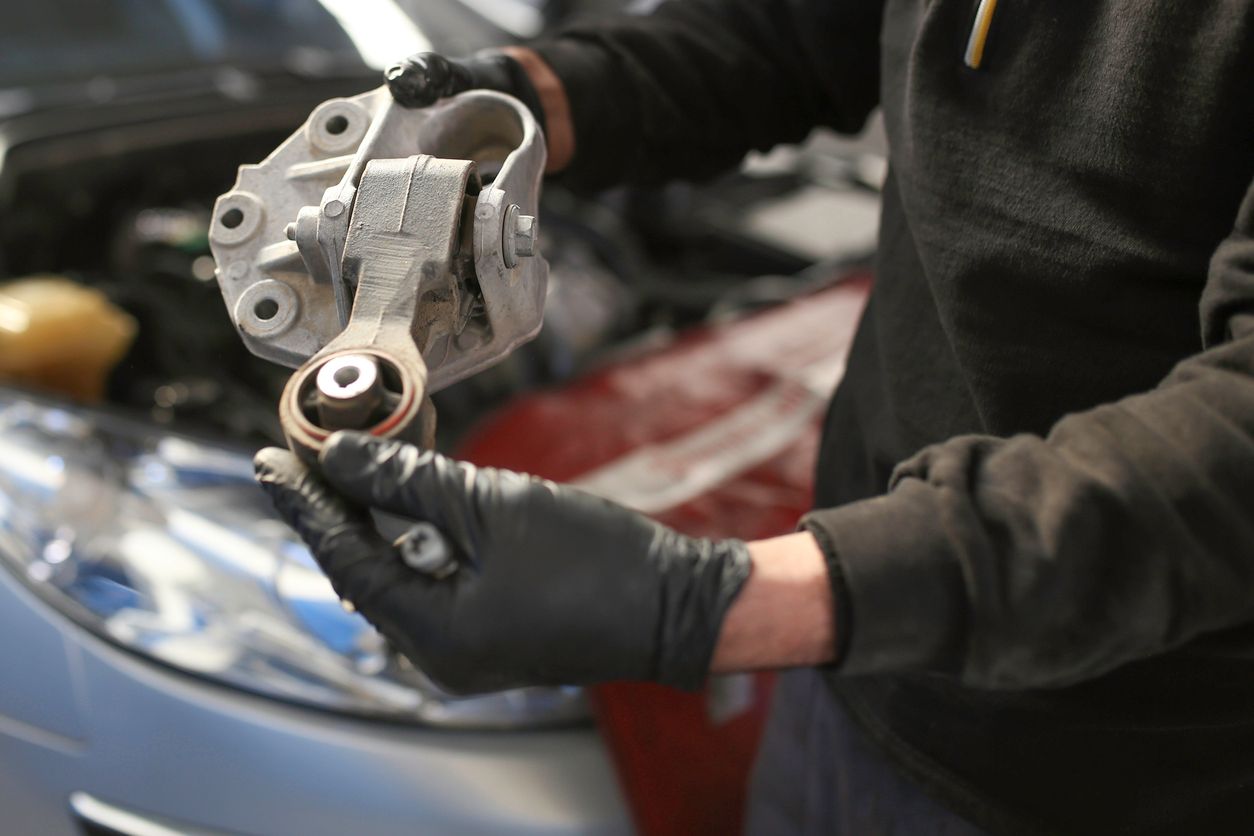
Mounts isolate normal engine vibration while controlling drivetrain movement. As rubber deteriorates or hydraulic mounts fail, more vibration can pass into the body and gear selector.
Comparing fleet maintenance material with vehicle-specific procedures can provide useful context, but mount diagnosis still requires physical inspection. Look for collapsed rubber, separation, fluid leakage from hydraulic mounts, or excessive movement under controlled load.
A failed mount may also cause a noticeable clunk when shifting between acceleration and deceleration. That symptom strengthens the case for inspecting the mounting system.
Examine the Linkage and Shifter Mechanism
Manual gear levers use bushings, cables, rods, or direct mechanical connections depending on vehicle design. Worn bushings can let ordinary transmission vibration become exaggerated at the shift knob.
General maintenance planning resources may help owners think systematically about inspection, but the shifter mechanism needs model-specific attention. Loose fasteners, degraded bushings, misadjusted cables, or contact between components can all transmit vibration.
| Vibration Pattern | Possible Source | First Check |
|---|---|---|
| Strongest at idle | Engine or mounts | Engine smoothness |
| Worse during acceleration | Mounts or driveline | Excess movement |
| Increases with road speed | Rotating drivetrain | Axles/driveshaft |
| Mainly in the lever | Linkage or bushings | Shifter mechanism |
Testing should also establish whether the same vibration can be felt through the seat, floor, pedals, or steering wheel.
Inspect the Rest of the Drivetrain
On rear-wheel-drive and four-wheel-drive vehicles, driveshaft balance, universal joints, center bearings, and related components can create vibration. Front-wheel-drive vehicles may develop vibration from worn inner CV joints or axle problems, particularly under load.
Owners browsing wheel and tire maintenance topics should also remember that wheel imbalance commonly produces road-speed vibration. Although wheel vibration may not originate at the transmission, it can travel through the chassis and be felt at the shifter.
A technician may road-test the vehicle at different speeds, gears, and throttle positions to separate engine-speed vibration from road-speed vibration.
Why Replacing Mounts Blindly Can Fail
Mounts are common suspects, but a vibrating shifter doesn’t prove they’re defective. Installing new mounts won’t correct an engine misfire, bent driveshaft, failing CV joint, loose exhaust contact, or worn shifter bushing.
Another error is replacing only one severely worn mount without inspecting the others. A weak neighboring mount may continue allowing excessive movement and make the original symptom seem unresolved.
Frequently Asked Questions
Is some gear lever movement normal?
Yes. Small movement can occur as engine torque loads and unloads the drivetrain, particularly in manual-transmission vehicles. New, excessive, or rapidly worsening vibration deserves inspection.
Can an engine misfire make the gear stick vibrate?
It can. A misfiring engine produces uneven rotational force, and that vibration may travel through the mounts and transmission into the gear lever. Engine performance should therefore be checked before blaming the gearbox.
Can worn CV joints cause vibration while accelerating?
Certain inner CV joint problems can create vibration or shudder under acceleration. The pattern often changes when throttle load changes, making a road test useful for distinguishing axle problems from engine-speed vibration.
Follow the Vibration to Its Source
Gear lever vibration is most useful as a diagnostic clue when you compare it with RPM, vehicle speed, throttle load, and other vibration points around the cabin.
Inspect mounts and shifter components, but keep the entire drivetrain in the diagnosis. Identifying whether the vibration follows engine speed or road speed can narrow the search dramatically before expensive components are replaced.