






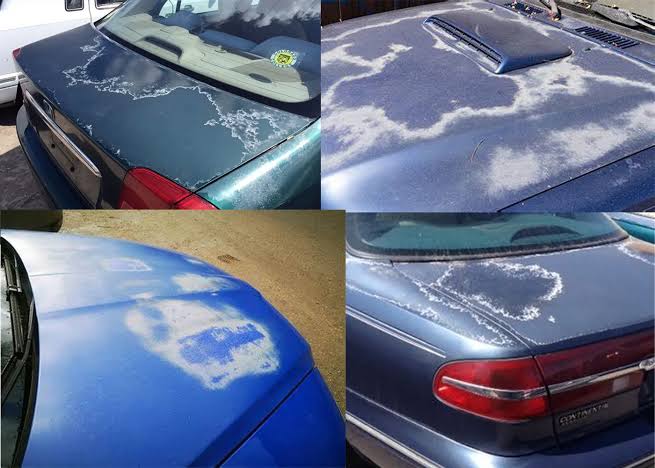
Oxidized automotive paint often looks faded, chalky, hazy, or noticeably less reflective than surrounding panels. Exposure to sunlight, air, heat, and neglected protection can gradually weaken the upper surface.
Careful polishing may restore oxidized paint when enough healthy clear coat remains. The key is identifying whether you’re dealing with removable oxidation or permanent coating failure before abrasive correction begins.
Oxidation Is Not the Same as Clear-Coat Failure
Light oxidation affects the surface and may respond to cleaning and polishing. Clear-coat failure involves physical breakdown of the protective layer and commonly appears as peeling, flaking, cloudy patches, or lifting edges.
That distinction determines whether polishing is sensible. Owners browsing automotive upkeep guidance should resist treating every dull panel with the same aggressive compound.
Perform a Small Inspection
Wash the panel thoroughly and examine it in several lighting conditions. Contamination can imitate oxidation, while old wax residue or mineral deposits may create a similar cloudy appearance.
Try the mildest correction method on a small test area. A noticeable improvement suggests that controlled polishing may help the surrounding surface.
| Paint Appearance | Possible Cause | Response |
|---|---|---|
| Light haze | Surface oxidation | Mild polish test |
| Rough texture | Bonded contamination | Clean first |
| Swirl marks | Wash damage | Light correction |
| Flaking coating | Clear-coat failure | Refinishing assessment |
Prepare the Surface Before Polishing
Polishing a contaminated car can grind particles across the finish. Begin with a thorough wash, then address bonded contaminants using paint-safe techniques before reaching for abrasive products.
Different vehicle-care discussions found through auto information resources may recommend everything from hand polishing to machine correction. Regardless of method, surface preparation determines how safely the abrasive stage can proceed.
Tape or avoid vulnerable trim, edges, decals, and damaged areas. Panel edges often have less paint material and can be easier to over-polish.
Choose the Least Aggressive Correction
Start mild. A finishing polish with a soft pad may be enough for shallow oxidation, especially on paint that has been maintained reasonably well.
If improvement is limited, step up cautiously rather than beginning with a heavy compound. Machine polishing can produce faster results, but incorrect pad selection, excessive pressure, poor technique, or repeated passes can remove unnecessary clear coat.
People researching restoration across general web publications may encounter dramatic before-and-after techniques. A safer target is measurable improvement while preserving as much original coating as possible.
After polishing, remove residue and inspect the panel from several angles before deciding whether another pass is justified.
What Owners Often Get Wrong
The biggest misconception is that polishing adds paint back to the vehicle. It doesn’t. Polishing removes a microscopic amount of material to level surface defects and improve how light reflects.
That means there is a practical limit to repeated correction. A panel that looks better after one pass doesn’t automatically benefit from three more.
Another mistake is polishing paint that’s already peeling. Once the coating has physically separated, abrasive correction won’t reconnect or replace it.
Frequently Asked Questions
Can oxidation return after polishing?
Yes. Polishing may remove damaged surface material, but continued sun and environmental exposure can cause deterioration again. Applying protection afterward and maintaining it regularly can slow the process.
Can oxidized paint be polished by hand?
Mild oxidation may respond to hand polishing, though it usually requires more time and effort than machine correction. Severe defects may not improve enough without professional equipment or refinishing.
Does clay remove paint oxidation?
Detailing clay primarily removes bonded surface contamination rather than correcting oxidized paint. It can be a useful preparation step, but polishing is generally responsible for restoring gloss when oxidation is actually present.
Restore Gloss Without Chasing Perfection
Treat oxidation as a surface-preservation problem, not an excuse to polish endlessly. Clean first, perform a controlled test, and increase correction strength only when the paint condition supports it.
Once the desired improvement appears, stop polishing and protect the finish. If peeling, deep cracking, or exposed base coat is present, professional refinishing is a better direction than stronger abrasion.